
Easter at Emmaus
On Caravaggio, resurrection, and wandering the National Gallery before opening time.

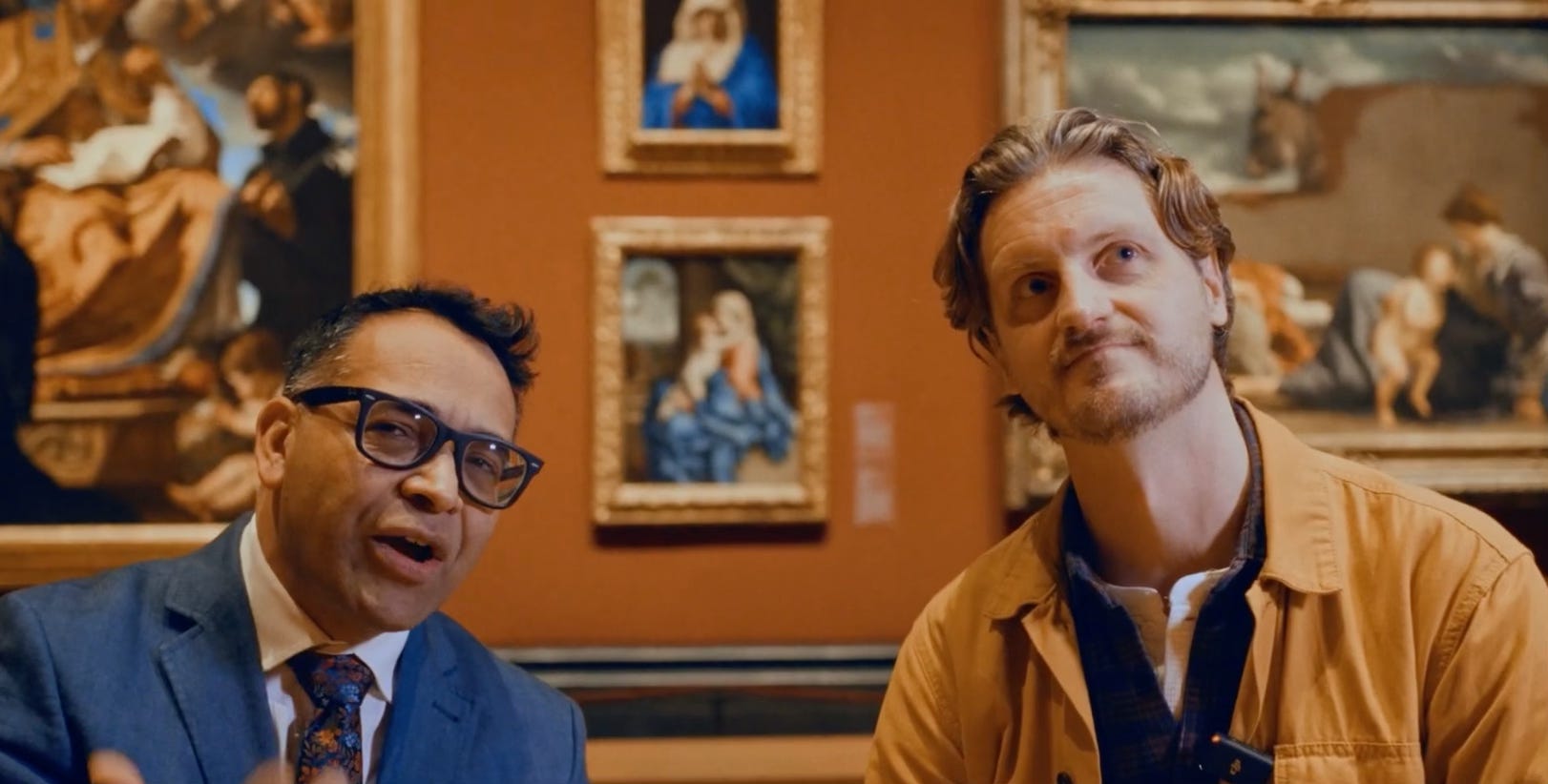
It’s not every day one finds oneself wandering the halls of the National Gallery before opening hours, trying to look as though this sort of thing happens all the time. This week, however, I had the great privilege of being filmed there, discussing Caravaggio’s Supper at Emmaus with Dr Krish Kandiah OBE. If you find yourself in need of a little more culture over the Easter weekend, you can view the video here.
The interview formed part of a film presentation for The Sanctuary Foundation and was broadcast as part of a live nationwide assembly for schoolchildren up and down the country. The Sanctuary Foundation is a UK charity supporting political refugees to find homes and work here. Much of their work has focused on those arriving from Ukraine and Afghanistan, though their reach is steadily widening to include Albania, Sudan and beyond. It is a remarkable organisation doing quietly extraordinary work, I commend them to you.
They are also running an art prize for school students, inviting them to create either an artwork or a piece of poetry illustrating their empathy with, or experience of, being separated from the place they call home. The entries will be judged by a panel of celebrities, refugees and journalists, with the top 30 works going on display at the British Library during National Refugee Week, Monday 15 to Sunday 21 June 2026. Well worth a look, or at the very least mentioning to any school-aged children within polite conversational reach.
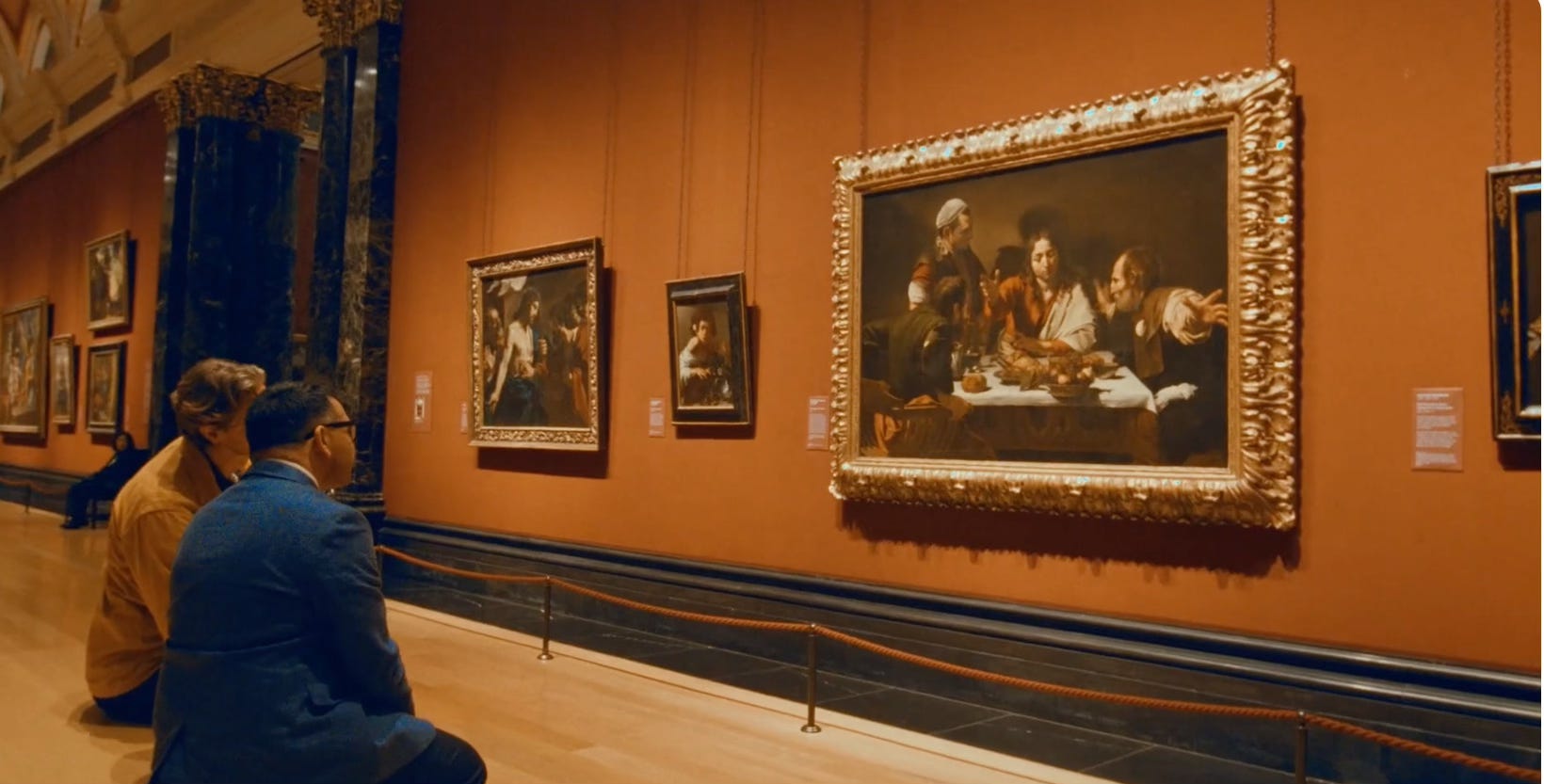
For Easter this year, the charity organised a nationwide online school assembly exploring themes of resurrection and new life through the Gospel story. My invitation to contribute came while I was, somewhat improbably, marooned on the Hebridean island of Iona. It is not often one receives a call to be filmed at the National Gallery while balancing paint pots halfway up a windswept hill, but there we are. I try to remain adaptable, if slightly windswept.
In truth, it was a rather lovely excuse to return to Caravaggio’s painting, which I used to visit almost weekly during my early days in London, usually on a lunch break, occasionally accompanied by a cheese sandwich smuggled in with all the subtlety of a minor heist. It remains a work I love, full of drama, divinity, humanity, and that peculiar Caravaggio knack for making the miraculous feel as though it might happen just across the table from you, possibly between courses.
There was also something quietly magical about wandering the galleries with Krish before the doors opened. I’m not sure I had ever seen the National Gallery quite so empty. It felt at once a privilege and ever so slightly illicit, as though we had been let in on a secret. I half expected a polite but firm tap on the shoulder at any moment, followed by a gentle but unmistakable escort towards the exit.
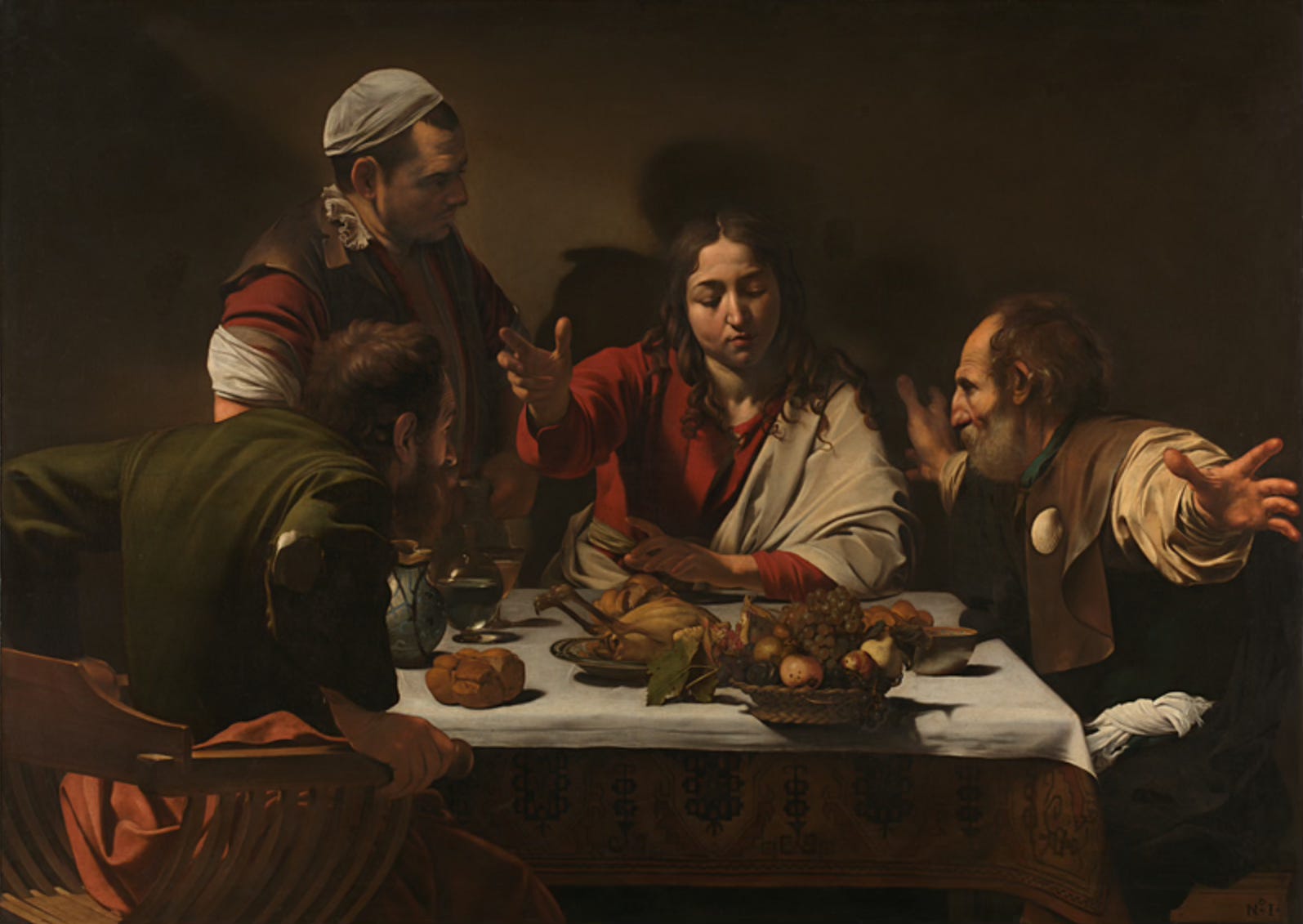
Caravaggio based his Supper at Emmaus on Luke’s account of Jesus’ appearance to the disciples after the resurrection. As they walk from Jerusalem to Emmaus, they are unaware that the stranger accompanying them is Christ himself. It is only later, as they break bread together, that he reveals himself to them.
The painting is alive with movement; everything feels on the brink of happening. Even the bowl of fruit looks as though it’s about to make a bid for freedom. Christ sits at the centre, arms outstretched in a gesture that feels both like a blessing and an invitation. Caravaggio’s use of perspective and foreshadowing is masterful, drawing the viewer into the scene with almost theatrical immediacy.
Jesus appears younger than in many traditional depictions, clean-shaven and slightly fuller in face. Caravaggio may have been referencing earlier iconographic traditions, or perhaps responding to influences such as Michelangelo’s Last Judgement. It may also suggest the vitality, the fecundity, of eternal life. The meal before them, though simple, is painted with generous abundance: bread, meat and fruit, all teetering on the edge of the everyday becoming something rather more significant.
Caravaggio painted the Emmaus supper at least twice. The second version, completed five years later in 1606, came during a particularly dark chapter in his life. On the run for murder and fleeing Rome, his circumstances had become, shall we say, complicated. This later painting is markedly more subdued: darker tones, less fruit, less light. While Christ remains youthful, he is now bearded and looks as though he might appreciate a decent night’s sleep. The disciples appear more worn, more human, and a new figure, a woman, enters the scene, looking as though she, too, has had a long week.
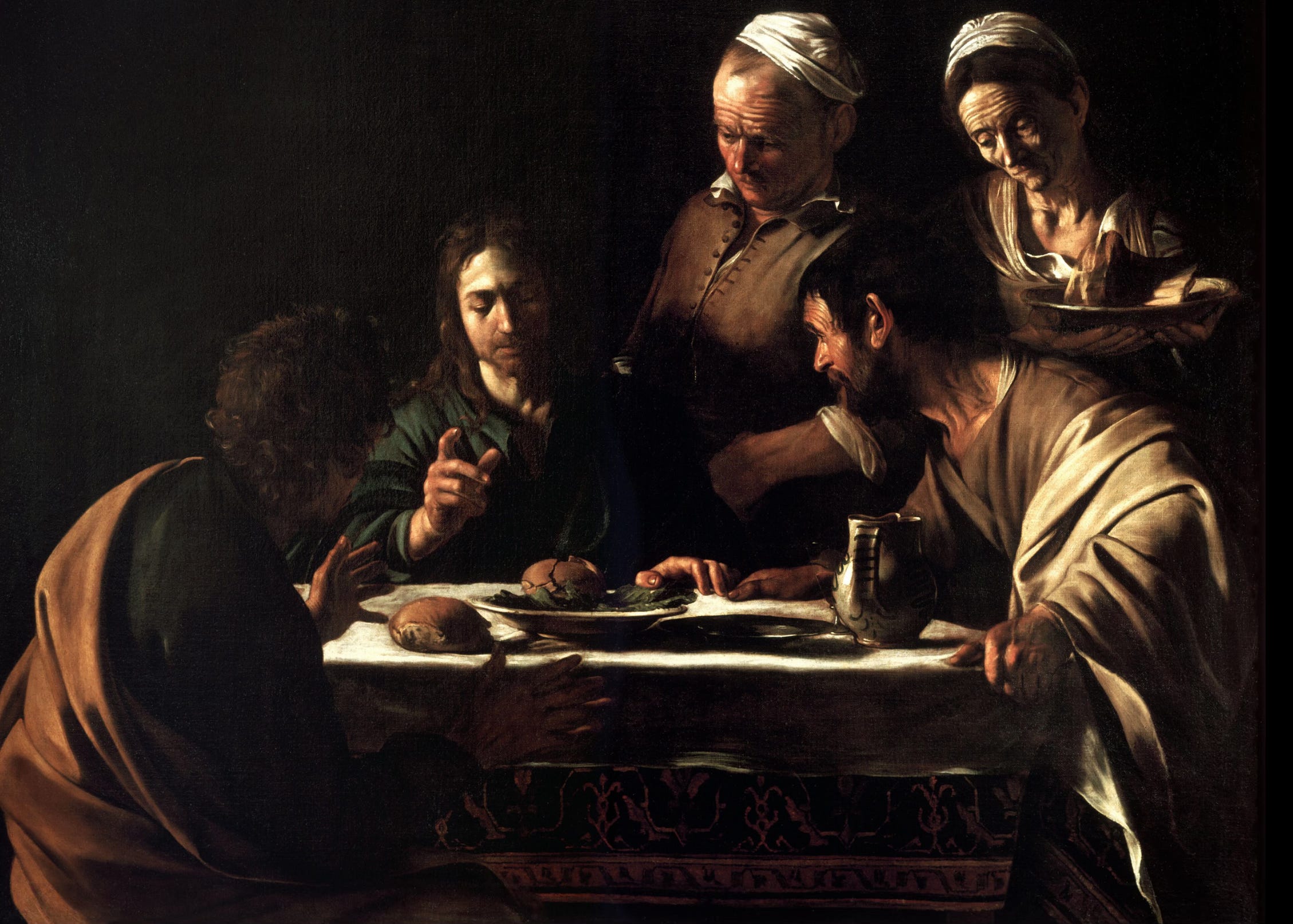
I can only speculate as to why Caravaggio returned to this subject at such a moment, but it is hard not to wonder whether, in his darkest hour, he found something steadying in a story of recognition, restoration and new life. Even fugitives, it seems, are not beyond the reach of resurrection.
It was a pleasure to reflect on this painting with Krish in the light of Easter. These themes of death giving way to life, of recognition, and of hope for what lies beyond, have a way of lingering rather helpfully in the days that follow. I hope you’re able to watch the video. More than that, I hope you have a joyful and celebratory Easter. As we say in Christian circles, “He is risen indeed!”
Thank you for reading this Substack. I write with joy, and I write for free. If you’d like to increase the joy, you can become a paid subscriber for the monthly price of a Caravaggio painting, generously spread over fifteen hundred years.
To find out more about The Sanctuary Foundation, you can follow the link here.
Love your writing. Keep going we need this.