
Marooned, Then Enlightened
Iona, Celtic Christianity, and the strange overlap of art and pilgrimage

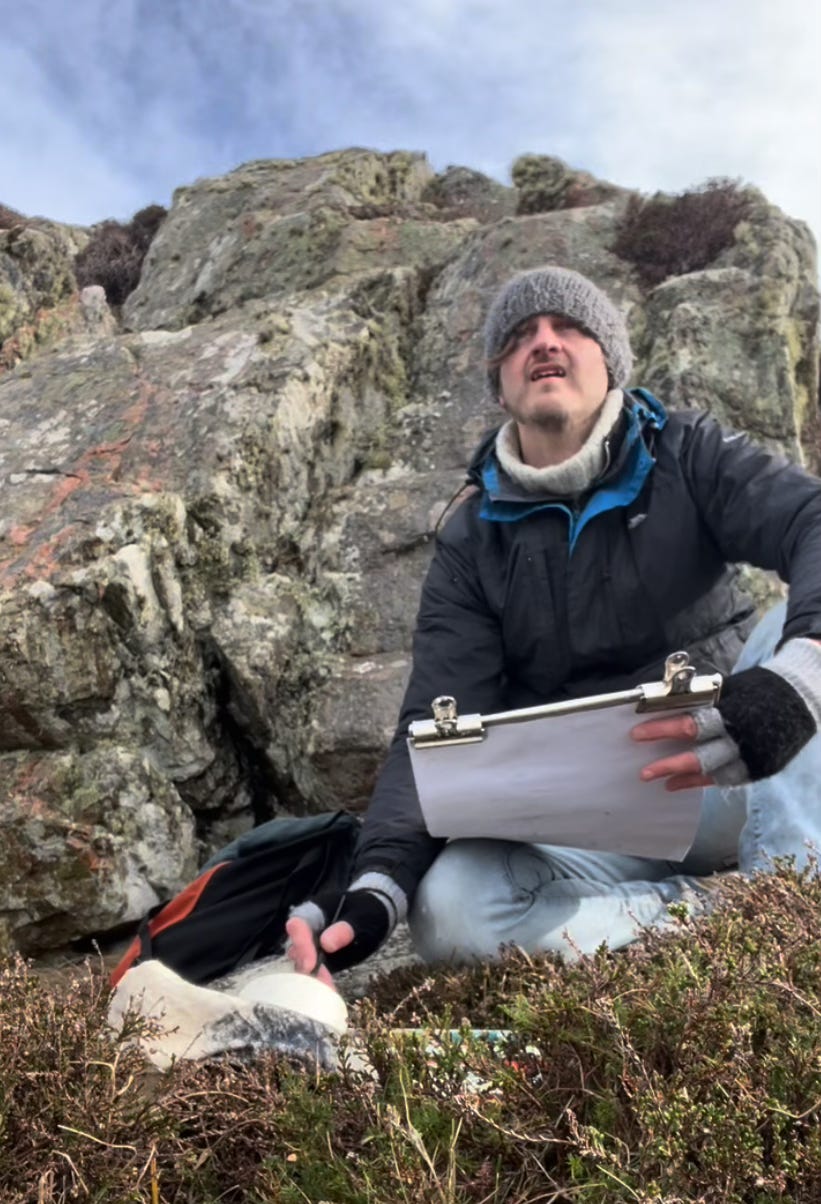
Greetings from London, where I am now safely returned after being marooned for several days on the Hebridean island of Iona. Thank you to all who reached out with concern. I can happily report that I have survived and am once again within reach of both central heating and a reliably functioning flat white.
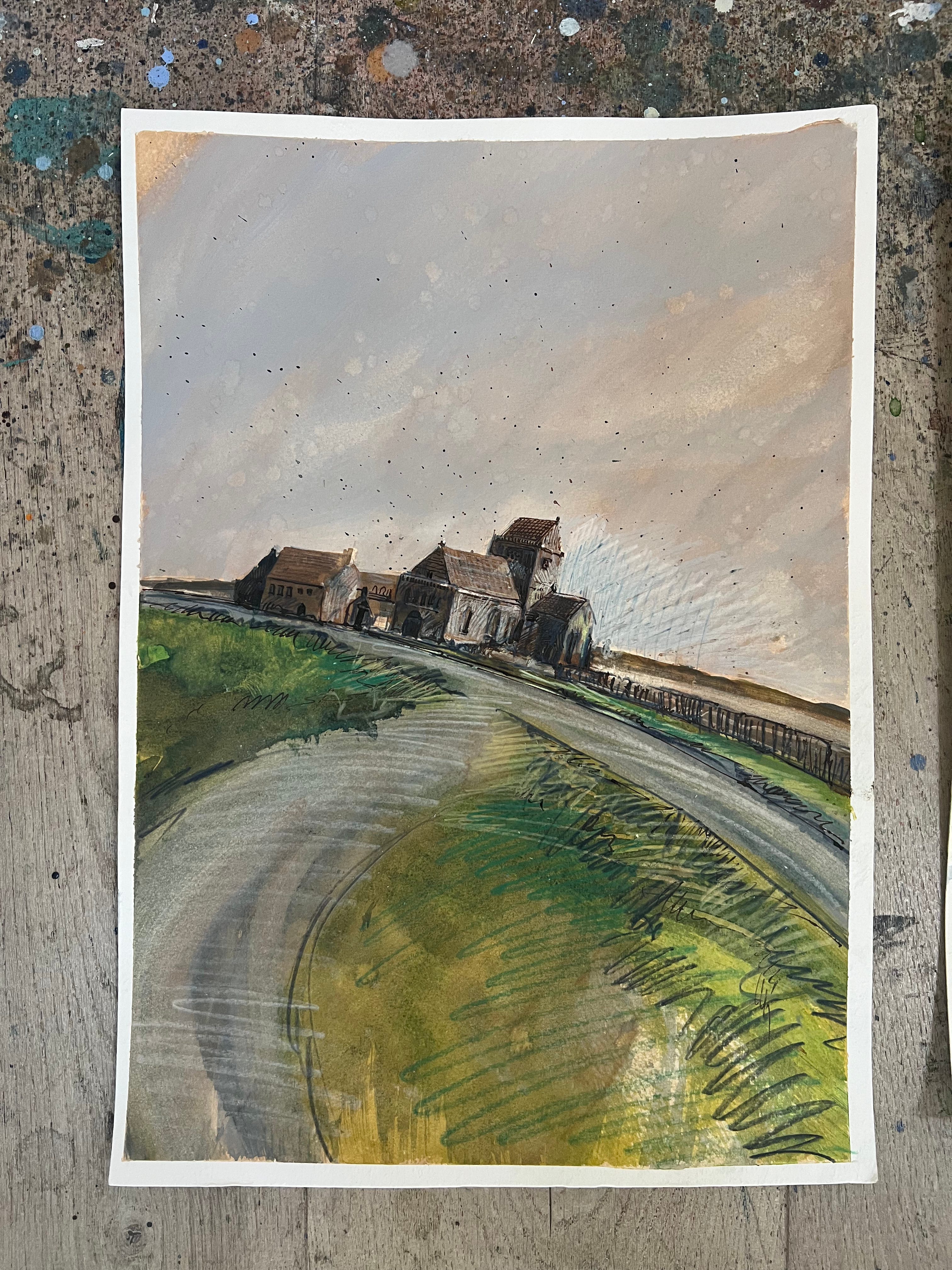
My time on Iona was fecund in many ways. I completed a new series of studies and plein air paintings, which I look forward to sharing with you soon (assuming they survive the transition from wind-battered sketchbook to the relative calm of the studio). I also found myself curious to the mysteries of Celtic Christianity and its relationship to my own faith, a somewhat different strand of Christianity.
I met truly wonderful people: the small but steadfast island community, and fellow pilgrims who had travelled from across the world to pray where Columba first brought the gospel to the British Isles. It was a particular privilege to pray in the Abbey alongside pilgrims from Germany who had journeyed such a distance simply to worship in this modest cradle of Christianity in the west of Scotland. Iona, it seems, continues to exert a quiet but insistent pull on those seeking God through solitude, nature, prayer and scripture.
And somewhere between battling the elements and attempting to keep my paint from blowing into the Atlantic, I began to wonder whether pilgrimage and painting might, in fact, be closely related pursuits.
Both begin with a hunch - a belief that something meaningful might happen, despite very little evidence at the outset. Both require a willingness to give up time, comfort and a not insignificant amount of money in pursuit of something that may, at any moment, refuse to cooperate. Both involve long stretches of uncertainty punctuated by the occasional moment of clarity that makes the whole thing feel, briefly, worthwhile. Both require leaps of faith, and a hope that something good will come if we only keep going.
There are rituals too. The pilgrim packs lightly (or thinks they have), the painter prepares their kit with practised routine, laying out their tools with quiet intention. There is a language, a community, a shared set of values - sometimes unspoken, but deeply felt. Galleries, like churches, become places of gathering, aspiration and, occasionally, quiet judgement. And in both worlds, there is often a strong moral seriousness: a concern for justice, for meaning, for how one ought to live.
Even the process of painting itself reminds me of prayer. A quiet poesis of thought that becomes material in the world, not unlike the intentions of prayer spoken in hope for a tangible outcome.
While on Iona, I was reminded of the Iona Community’s enduring commitment to social justice: “We deplore social injustice… We actively campaign for justice at all levels and have a particular commitment to the inclusion of people living in poverty.” Such concerns lie, of course, at the heart of many religious traditions - but they are not absent from the artistic community either.
Which brings me to the question: is contemporary art, in some quiet way, practising a form of secular pilgrimage?
I am reminded of the words of Sarah Thornton in Seven Days in the Art World, who writes: “For many art insiders and art aficionados of other kinds, concept-driven art is a kind of existential channel through which they bring meaning to their lives. It demands leaps of faith, but it rewards the believer with a sense of consequence. Moreover, just as churches and other ritualistic meeting places serve a social function, so art events generate a sense of community around shared interests.”
Perhaps the painter, like the pilgrim, sets out not entirely sure what they will find - but with just enough faith to begin.
Thanks for reading this article. I write for joy and I write for free.If you’d like to support my writing endeavours you can upgrade to paid for the same price as a London flat white.
Such a telling little read! Your description of the artist’s internal ongoing battles rings so true. And even pilgrimage (I’m not a fan) as a lens to see it is very helpful - as was the prayer angle. The marooned bit of it must have been scary!
You touched on concept-driven art and secular pilgrimage (though I’m not familiar with Sarah Thornton). That too was good insight for me. At art college some of what I did, as a Christian, was aimed at fighting my shyness. So I would force myself to do openended public or semi-public things - often where the outcome couldn’t be predicted. Looking back it certainly was “a kind of existential channel through which they bring meaning to their lives. It demands leaps of faith, but it rewards the believer with a sense of consequence.” “Meaning” for me was not “what is life about?” (the Bible is clear on that); rather, it was something more like: how do I as a Christian and an artist actually, in life, engage with normal human struggles?
Thanks again Ally - a cathartic read!
(Sorry this is a bit long)
Love this Ali, ‘ both begin with a hunch, a belief that something meaningful might happen, despite very little evidence at the outside.’ Great writing!