
Reflections From the Edge
Will a Week on Lindisfarne Convince Me to Become a Hermit?

Shall I Become a Hermit?
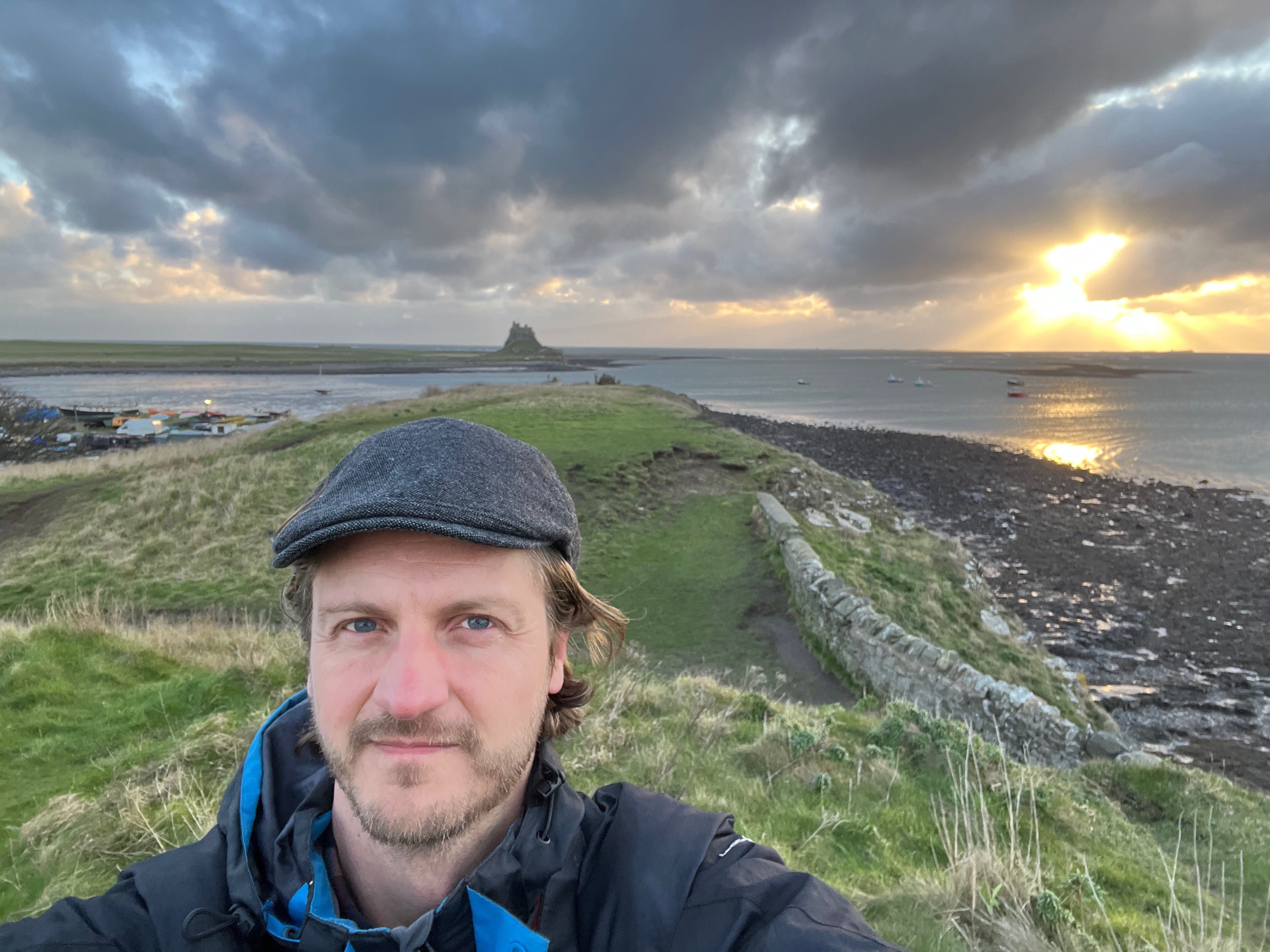
Greetings from Lindisfarne, Holy Island! The north wind is rising, it’s freezing cold, and I’ve been painting here for the last week, contemplating the meaning of life through chattering teeth.
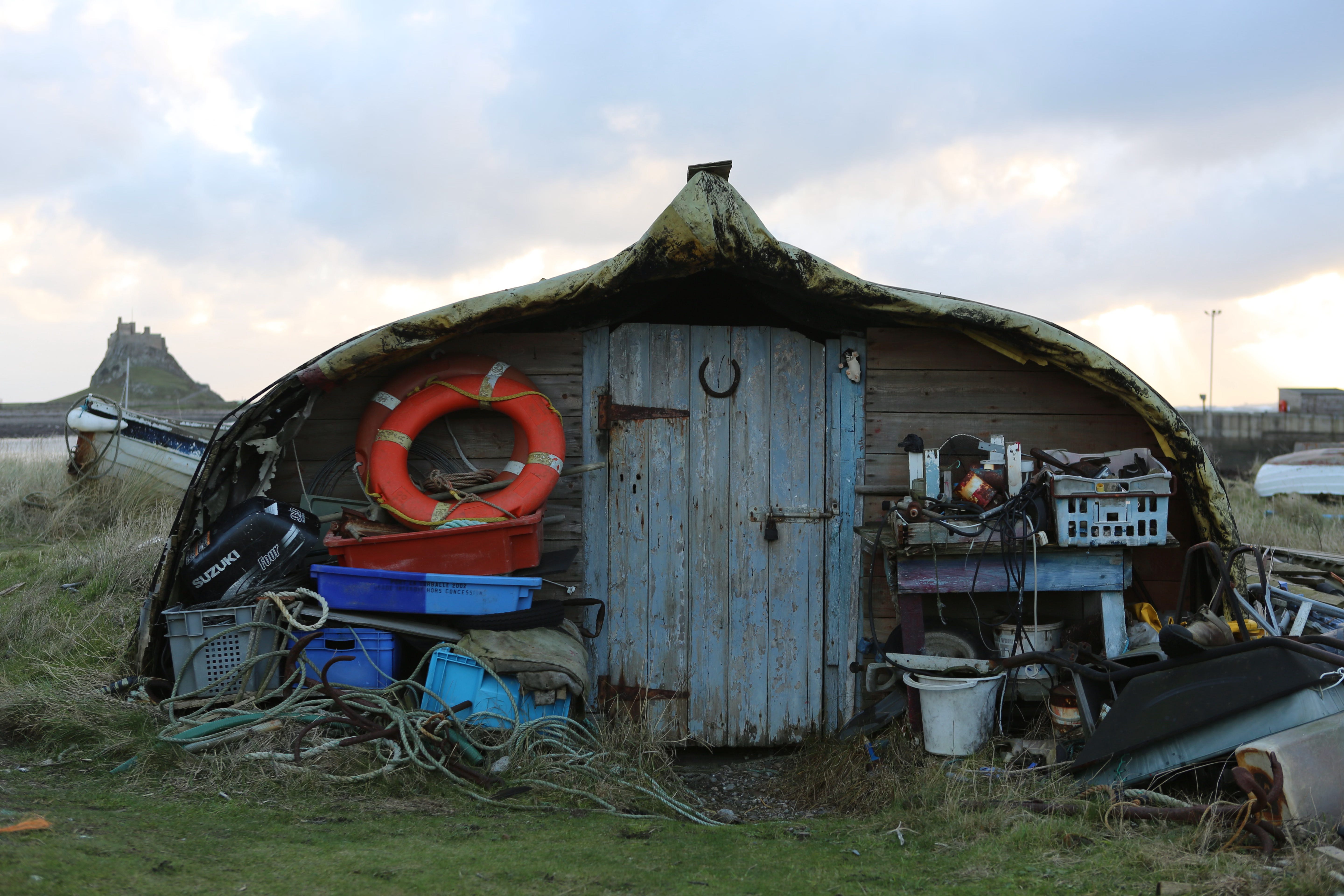
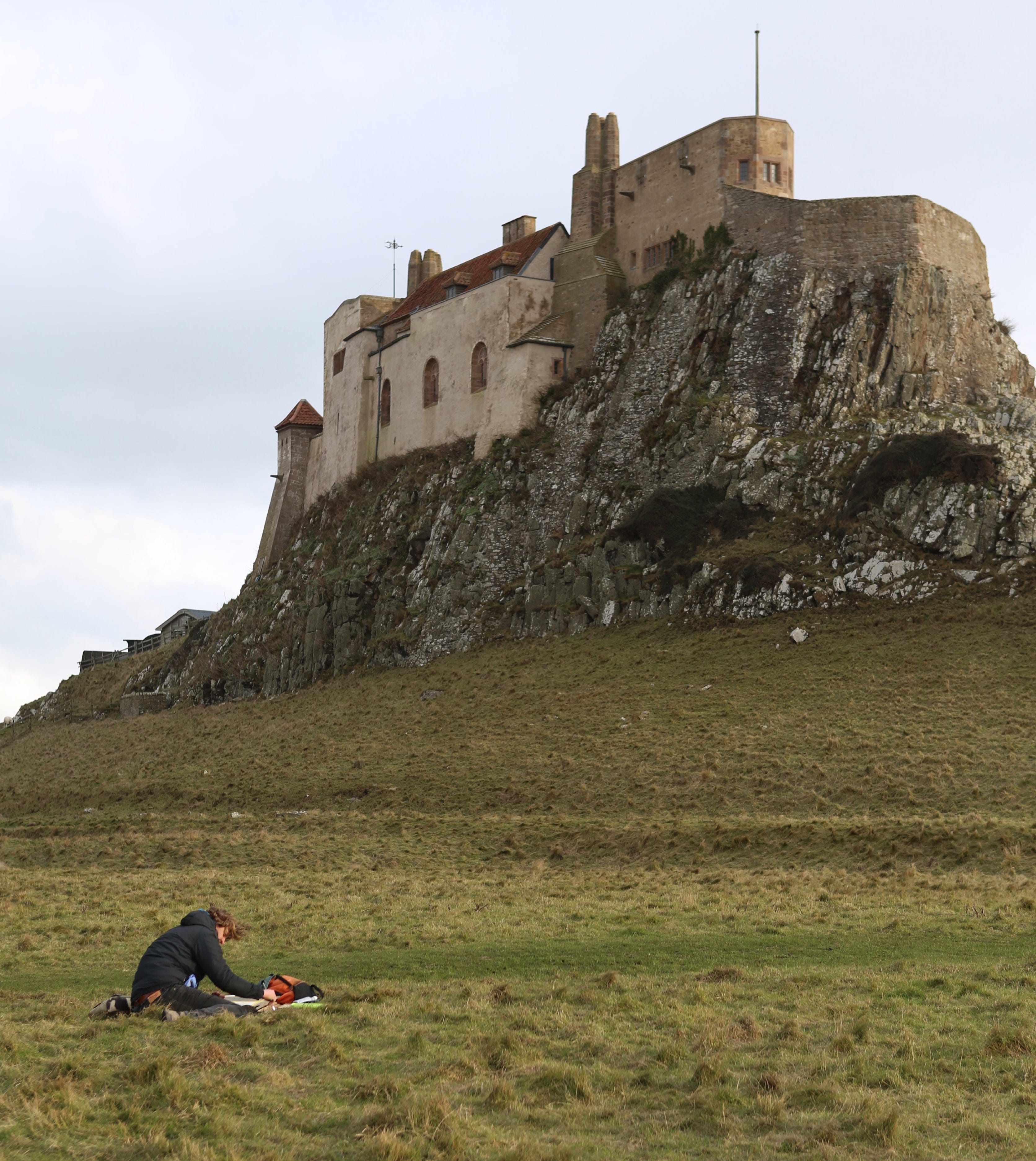
Holy Island is a charming little sliver of land off the Northumbrian coast. It’s bleak, wild, and completely cut off at high tide. If you don’t keep an eye on the time, you might find yourself auditioning for the role of “Stranded Tourist.” Or, like me, you can choose to stay on the island, and when everyone else departs, it becomes hauntingly quiet, perfect for deep thoughts or wondering if you’ve inadvertently joined a monastery. And of course there is one handily on the island, albeit now a ruin.
I’m here on Lindisfarne to paint and research my new project, which revolves around sacred landscapes and the holy islands of England, Scotland, Wales, and Ireland. More on that soon. For now, let me share a few tales of this extraordinary place.
Lindisfarne holds significant weight in the story of Christianity in northern England. Many consider it the cradle of Christianity, where Saint Aidan was sent from Iona to establish a priory in the 7th century. Later, Saint Cuthbert took the reins, which kicked off a merry-go-round of priories, cathedrals, Viking invasions, myths, stories, and pilgrimages that have evolved together through the years like the moss of varied character that now covers the ruined priory walls. The island is positively overflowing with rich stories, folklore, and Christian tradition, some of which may even be true.
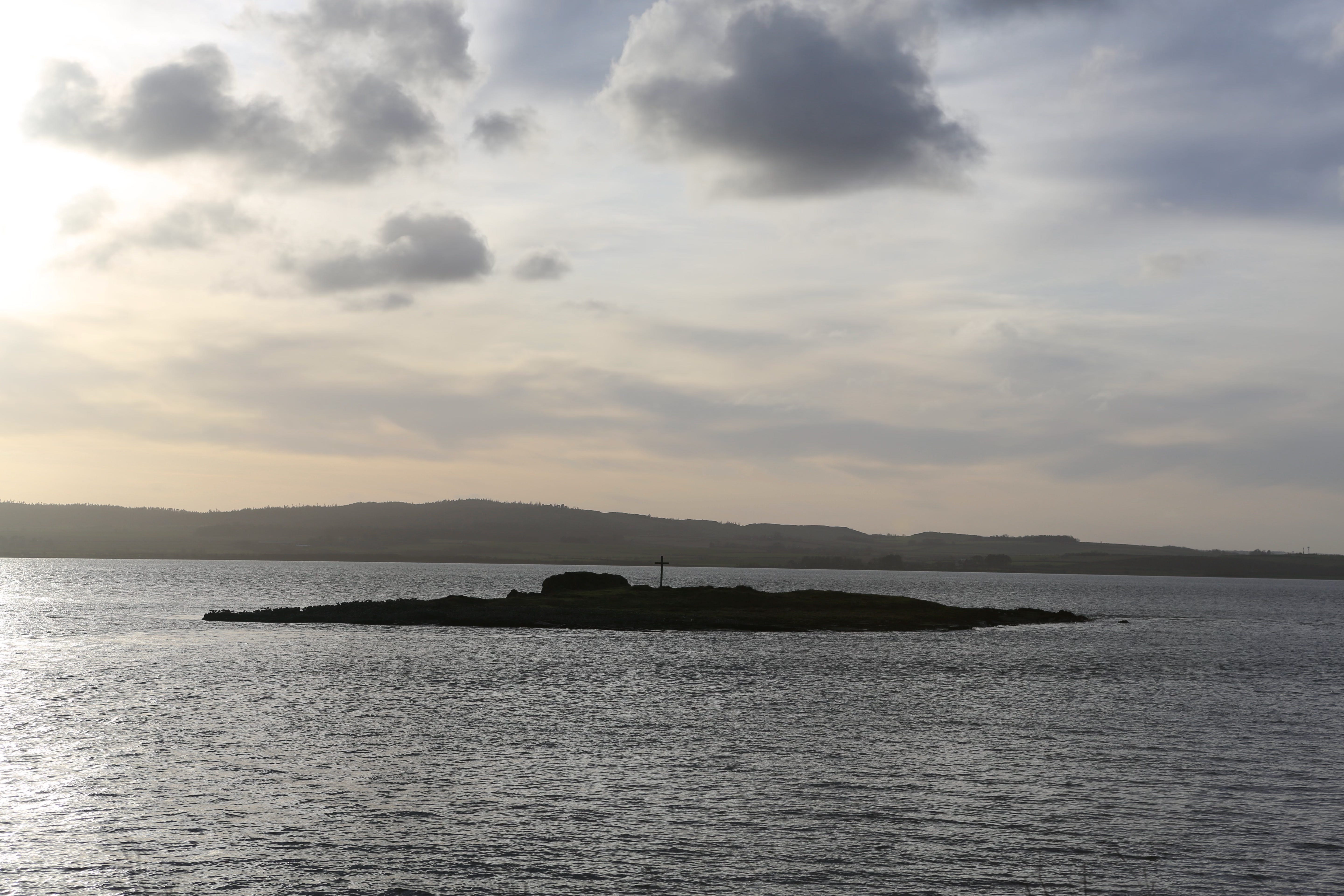
Just off Lindisfarne is a tiny slip of land called Saint Cuthbert’s Island, named after the saint who lived there as a hermit. I spent several hours painting on his island, channelling my inner hermit. And let me tell you, it was astonishingly cold. I can’t fathom how he endured the elements for so long, and I doubt there were any heating grants for saints.
Living as a hermit may seem positively alien to modern sensibilities, but it was quite fashionable in the 7th century, at least if you were a Northumbrian monk. Today, those of us who prefer a bit of solitude are often labelled as unsociable or, dare I say, too introspective. Yet, I suspect it’s far more important than we think to make time for quiet reflection alone, and for Christians, to commune quietly with God, and for artists, and especially Christian artists. Now, I’m not suggesting we all don brown robes and forego modern plumbing (imagine the horror of it!) but I do wonder what life might look like if we adopted a few of those hermit principles.
I reflect on how Jesus began His ministry in solitude in the wilderness, after his baptism. “At once, the Spirit sent Him out into the wilderness, where He was tempted by Satan for forty days. He was with wild animals, and angels attended Him.” (Mark 1:12-13) It’s rather a surprising choice for someone preparing for public ministry, opting for alone time rather than rallying the troops. Yet, this journey from water to wilderness hints at His priorities in ministry. Namely, to seek time alone with God in preparation for serving others.
For Cuthbert, connecting with God meant connecting with nature. Now, I can almost hear a few eyebrows raising at the thought of seeking God through created things, especially in some conservative Christian circles. But let me reiterate - I am a fully signed-up Calvinist who values the authority of Scripture. However, I also see numerous examples in the Bible of those who sought God through nature and solitude.
Throughout the Bible, many figures turned to the beauty and solitude of nature to find God. For instance, after a dramatic showdown with the prophets of Baal, Elijah fled into the desert. He found refuge in a cave on Mount Horeb, where he discovered that God wasn’t in the wind or fire but in a gentle whisper.
Moses also had transformative experiences in the wilderness, spending 40 years as a shepherd in Midian. His journey culminated at the burning bush, where he was tasked with leading God’s people. Later, he spent 40 days on Mount Sinai receiving the Ten Commandments. His time in nature was vital for shaping his leadership.
Before becoming king, David spent hours in the pastures of Judea as a shepherd, worshipping God and composing psalms. While fleeing from King Saul, he sought refuge in the wilderness. John the Baptist made the stark wilderness his home, living apart from society to focus solely on God and prepare the way for Jesus. After his dramatic conversion, Paul spent three years in Arabia, likely in solitude and reflection. Similarly, the apostle John, exiled to the rocky island of Patmos, through adversary found a unique space for spiritual revelation, receiving the visions that led to the Book of Revelation.
So maybe there’s something to it. I’ll keep you updated on how I get on next week. And of course, if you haven’t heard from me in a week, it might be because I’ve become a fully fledged hermit living off locusts and wild honey (or, more likely, moss and molluscs, given that it’s Northumbria). If you still haven’t heard from me in a month, perhaps give my wife a call, or maybe the coast guard. Or both.