
The Friends Who Keep Us Making
On art, friendship and why we don’t make it alone

Last week I wrote a few thoughts about why artists need other artists. It’s funny how often, after pressing send, you immediately think of everything you forgot to say. Writing is rather like painting in that respect. You finally decide it’s finished, only to spot all the things you’d now do differently. Then you spend the next twenty-four hours resisting the urge to quietly edit it when nobody’s looking.
One thought, in particular, stayed with me. Not so much about artists, but about friends.
Don’t worry, this isn’t about to become one of those Oscar acceptance speeches where I thank everyone I’ve ever met, including the chap who sold me a sandwich in 1998. But I have found myself thinking about the people who I have walked alongside through the peculiar business of trying to make art for a living.
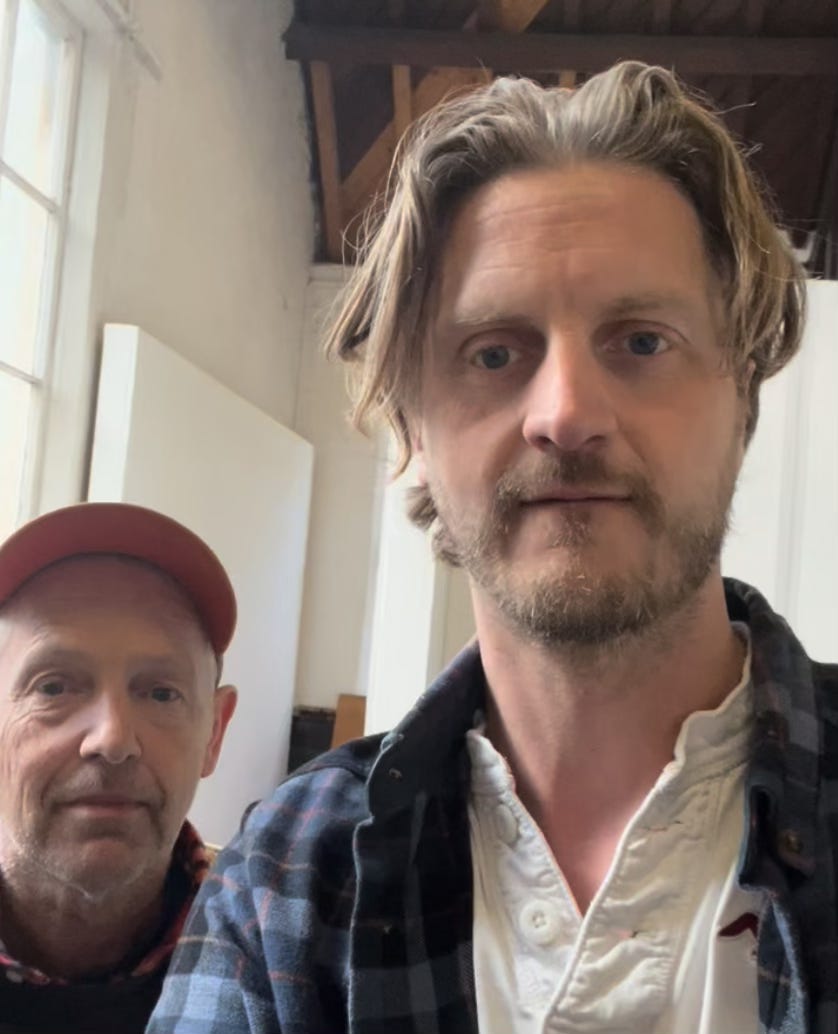
One of those people is my friend Cully.
We’ve known one another for more than twenty years. We first met through work before eventually founding Morphe Arts with a handful of others. Fifteen years later, Morphe is still going strong. Or at least still going, which, in the charity sector, is often close enough to miraculous.
When you’ve worked alongside someone for that long, friendship accumulates almost without you noticing. Cully and I have reached that stage where conversations rarely begin at the beginning and almost never end where they started. We simply pick up the thread. A painting. A book. The state of the arts. Why artists are so spectacularly good at overthinking absolutely everything, including ourselves. Cully is a good talker, but an even better listener.
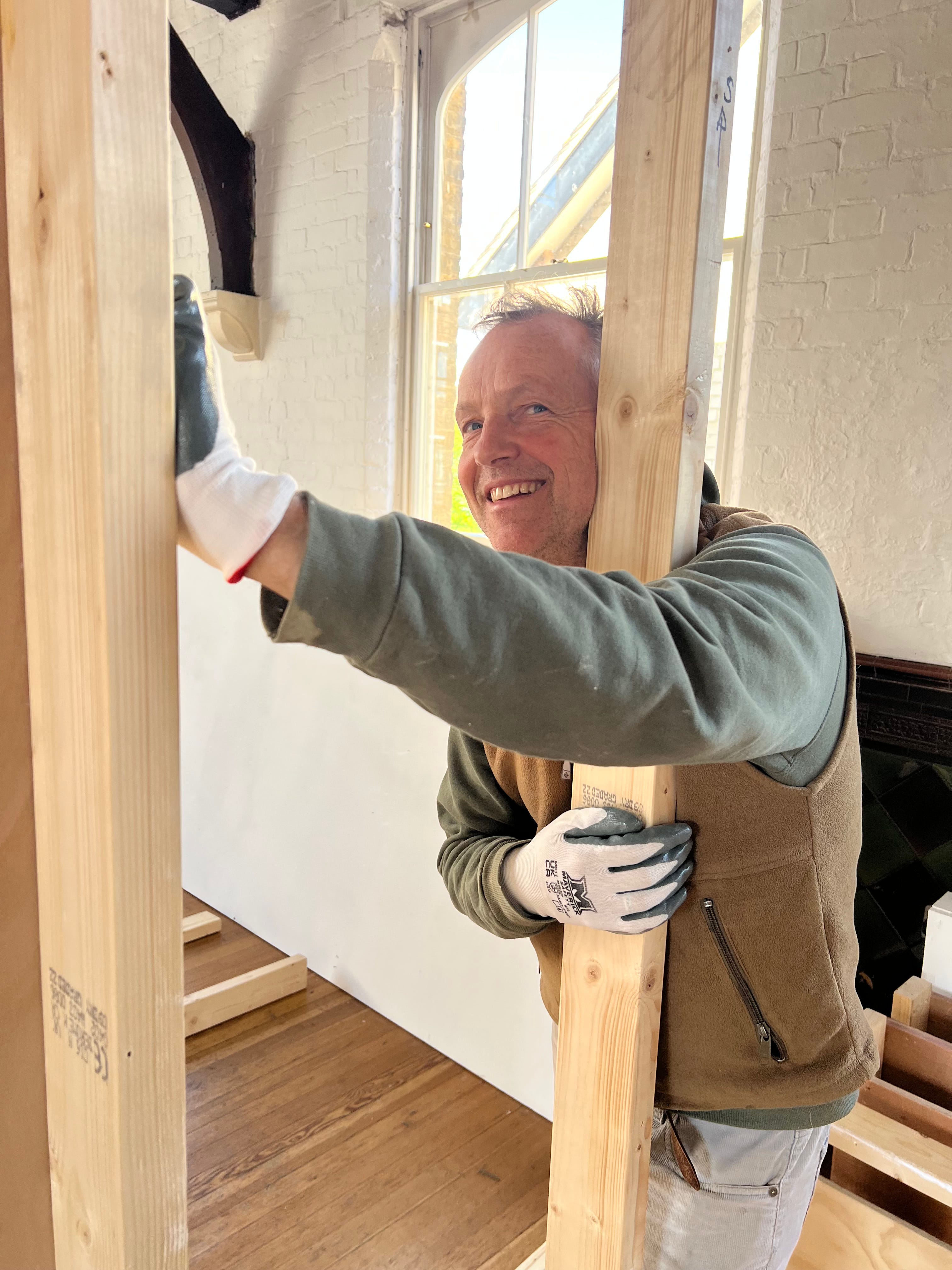
A few months ago we were commuting home on the Tube after a hard day’s work building studios for our charity in East London. We’d spent the day putting up plywood walls, painting them white and carrying more sheets of timber up and down a narrow fire escape than men of our age should really be attempting without first consulting a physiotherapist. We were tired, somewhere on the Northern line, and talking about nothing in particular. The conversation drifted from the build to books, from books to church, and from church to whatever artwork either of us happened to be wrestling with that week.
Nothing remarkable was said. No great revelation. Just two friends chewing the fat on the Northern line, smelling faintly of turpentine and sawdust. We were probably the only passengers who looked as though we’d spent the day building a shed in an art gallery.
It struck me afterwards that those journeys had become almost as important as the exhibitions and studio builds themselves.
Artists are often portrayed as solitary figures, locked away in draughty studios wrestling masterpieces into existence. It’s a wonderfully romantic image. It also happens to be largely nonsense. Most of us spend our days wondering whether we’ve just ruined another perfectly good painting.
The studio can certainly be lonely. There are days when the only intelligent conversation I have is with the kettle, and even that’s debatable. There are long stretches of silence interrupted only by the sound of brushes being washed and the occasional muttered sentence that probably shouldn’t be repeated on Substack. My own canvases have an uncanny ability to look magnificent at four o’clock in the afternoon and utterly dreadful by the following morning.
And yet, when I look back over the years, I don’t really remember the hours spent on my own. I remember the people.
The artists I’ve shared studios with. Friends I’ve exhibited alongside. Days spent standing in the rain on the west coast of Scotland, waiting for the light to break through while secretly wondering whether we’d all gone slightly mad. There is something wonderfully British about driving six hours to paint a landscape you can barely see because the weather has decided to arrive horizontally.
People imagine that artists make art. The truth is that, more often than not, artists make one another.
Looking back, I realise that almost every significant step in my own journey has someone else’s fingerprints on it. Friends who noticed something I couldn’t see. People who encouraged me when I was ready to pack it in. Honest voices who gently suggested a painting wasn’t quite there yet. Others who reminded me that the work was worth continuing when I’d begun to doubt it.
As artists, we need that. Left to ourselves we can mistake every doubt for wisdom and every setback for catastrophe. A painting doesn’t sell and suddenly we’re halfway through retraining as plumbers. A proposal is rejected and we’re convinced we’ll never write another word. By Thursday we’ve recovered just enough confidence to buy another expensive sketchbook, convinced this one will somehow make us paint better. Artists have an extraordinary faith in stationery.
Perhaps that’s why Scripture has remarkably little interest in isolated heroes. Abraham had Sarah. David had Jonathan. Paul had Barnabas. Jesus gathered disciples rather than freelancers. Even Frodo had Sam. It seems God has always preferred to work through friendships.
When I think about Morphe Arts, I’m grateful for the exhibitions, the conversations and the opportunities we’ve shared. But beneath all of that lies something much simpler: friendship. The sort that keeps showing up. The sort that asks how the painting is going, even when the answer is, “Not brilliantly.” The sort that quietly believes in you when your own confidence has wandered off for a few days.
As I’ve grown older, I’ve become less impressed by talent and more grateful for faithfulness, although not to say my friends aren’t talented of course! Looking back over the last twenty years, I don’t think the greatest gift God has given me has been the privilege of making art.
It’s been the people who kept me making it.
Thanks for reading this article. I write for joy and for free. To increase the joy you can become a paid subscriber which helps me keep writing. Or you can buy me a coffee to say ‘nice one, friend!’